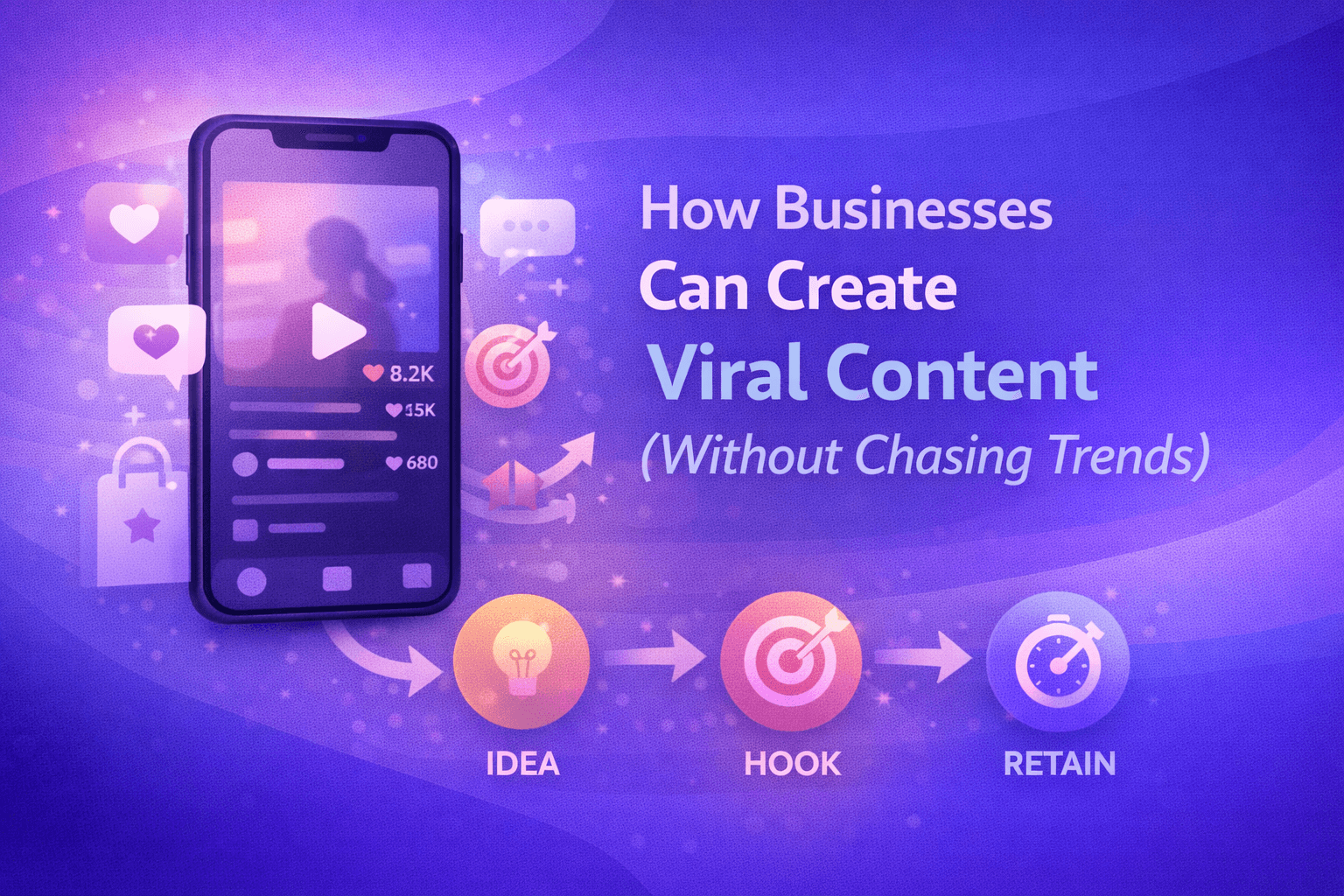
How Businesses Can Create Viral Content (Without Chasing Trends)
Feb 6, 2026
Creating viral content is something most businesses want — but very few understand.
The biggest misconception is that viral content is random or only achievable by creators and influencers. In reality, businesses can create viral content consistently when they understand how attention works on modern platforms like TikTok and Instagram Reels.
This article breaks down how businesses can create viral content, what “viral” actually means in a business context, and how to approach it strategically.
What Does “Viral” Mean for Businesses?
For businesses, viral does not necessarily mean millions of views.
Viral content means:
Reaching far beyond your existing audience
Performing significantly above your account’s average
Driving engagement, profile visits, and enquiries
A video with 50,000–200,000 views in a niche industry can be far more valuable than a million views with the wrong audience.
Why Most Businesses Struggle to Go Viral
Most businesses fail to create viral content because they:
Focus too much on selling
Copy trends that don’t fit their brand
Overproduce content
Post inconsistently
Don’t understand platform behaviour
Viral content is not about being loud or gimmicky — it’s about earning attention quickly.
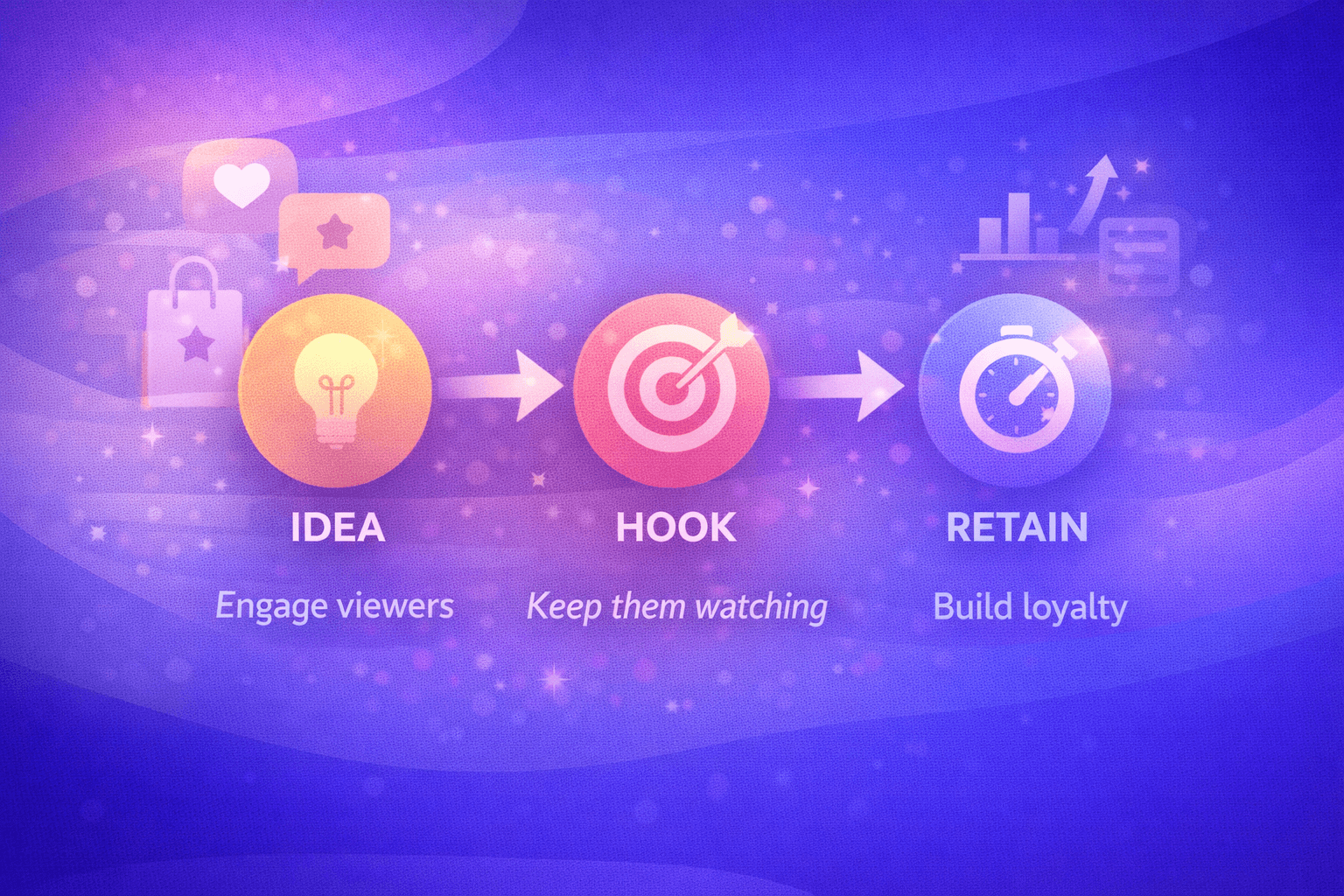
The Foundations of Viral Content
Before thinking about trends, businesses need to understand the fundamentals.
1. Attention Comes First
The first 1–3 seconds of a video decide everything.
Strong hooks include:
A surprising statement
A clear benefit
A visual that creates curiosity
A problem your audience recognises
If attention is lost early, the algorithm stops pushing the video.
2. Simple, Clear Messaging
Viral business content is easy to understand.
The best-performing videos usually:
Communicate one idea
Avoid jargon
Use on-screen text to guide the viewer
Complex messages reduce watch time.
3. Platform-Native Content
Viral videos look like they belong on the platform.
This means:
Vertical format
Natural lighting
Minimal branding
Casual, authentic delivery
Highly polished corporate videos often underperform on short-form platforms.
Content Types That Go Viral for Businesses
While every industry is different, some formats consistently perform well.
Educational Content
Teaching something useful builds authority and trust.
Examples:
Common mistakes customers make
Industry myths
Tips and insights
Behind-the-Scenes (NDA-Safe)
People love seeing how things work — even at a high level.
This can include:
Day-in-the-life content
Tools and environments
General processes (without sensitive detail)
Story-Based Content
Stories outperform sales messages.
Examples:
Client challenges and outcomes
Business lessons learned
Founder journeys
Opinion & Perspective
Taking a clear stance helps content stand out.
Examples:
“Why most businesses get social media wrong”
“What no one tells you about marketing”
Consistency Beats One-Off Virality
One viral video can help — but consistent performance builds brands.
Businesses that perform well focus on:
Repeating what works
Testing small variations
Posting regularly
The goal is not one viral hit, but a system that produces strong results over time.
Measuring Viral Success Correctly
Views alone are not enough.
Businesses should look at:
Watch time
Shares and saves
Profile visits
Website clicks
Enquiries generated
These metrics show whether content is driving real outcomes.
Can Any Business Create Viral Content?
Yes — but not every business should chase entertainment.
Viral business content works best when it:
Educates
Builds trust
Makes the brand easier to understand
Even traditionally “boring” industries can perform extremely well when content is framed correctly.
Final Thoughts
Viral content for businesses is not about trends, luck, or copying influencers.
It’s about understanding attention, delivering value quickly, and showing up consistently with content that feels natural to the platform.
When done correctly, viral content becomes a powerful growth tool — not just a vanity metric.
Want help creating viral-ready content for your business?
Learn more about how TenFold helps brands build high-performing short-form content systems, or get in touch to explore how this could work for you.
How Businesses Can Create Viral Content (Without Chasing Trends)
Outgoing links:
→ What Does a Short-Form Content Agency Do?
→ Influencer Collaborations blog
→ Why Businesses Fail on TikTok blog
→ Content Production page
→ Contact page
Incoming links:
← From Influencer Collaborations blog
← From TikTok Failures blog
← From TikTok Clients blog